
Rising And Penetrating Damp, Diagnosed And Treated
Damp walls, tide marks, salts and peeling paint. We find out what is really causing the damp, put the source right and replaster with the right materials.
- 5-Star Rated
- Survey Before Any Treatment
- Ready To Decorate
Two Kinds Of Damp, Two Different Fixes
Rising damp is ground moisture drawn up through a wall, usually where the damp proof course has failed, been bridged or was never there. Penetrating damp is water getting in from outside, through cracked render, failed pointing, leaking gutters or high ground levels.
From inside they can look alike, and condensation can look like both. That is why we survey first. Treating the wrong problem does not stop the damp.
Discuss Your ProjectHow We Can Help
- Survey your home with moisture readings, inside and out
- Explain the cause and your options in plain English
- Remove bridges such as high ground or render over the damp course
- Inject a new damp proof course where rising damp is confirmed
- Repair gutters, pointing or render to stop penetrating damp
- Strip out salt-contaminated plaster and replaster the wall
How We Treat Your Damp
We find the cause first, then treat it properly.
-
Step 1: Get In Touch
Tell us where you are seeing damp, staining or a musty smell.
-
Step 2: We Send The Right Specialist
Our Damp Proofing Division Specialist visits to take moisture readings inside and out.
-
Step 3: You Get The Full Picture
We assess whether it is rising damp, penetrating damp or condensation and what is causing it, allowing us to give you the perfect solution and an accurate quotation.
-
Step 4: We Get To Work
Once you give the go-ahead, we put the cause right, treat the wall and replaster it with a salt-resistant system.
Recent Projects
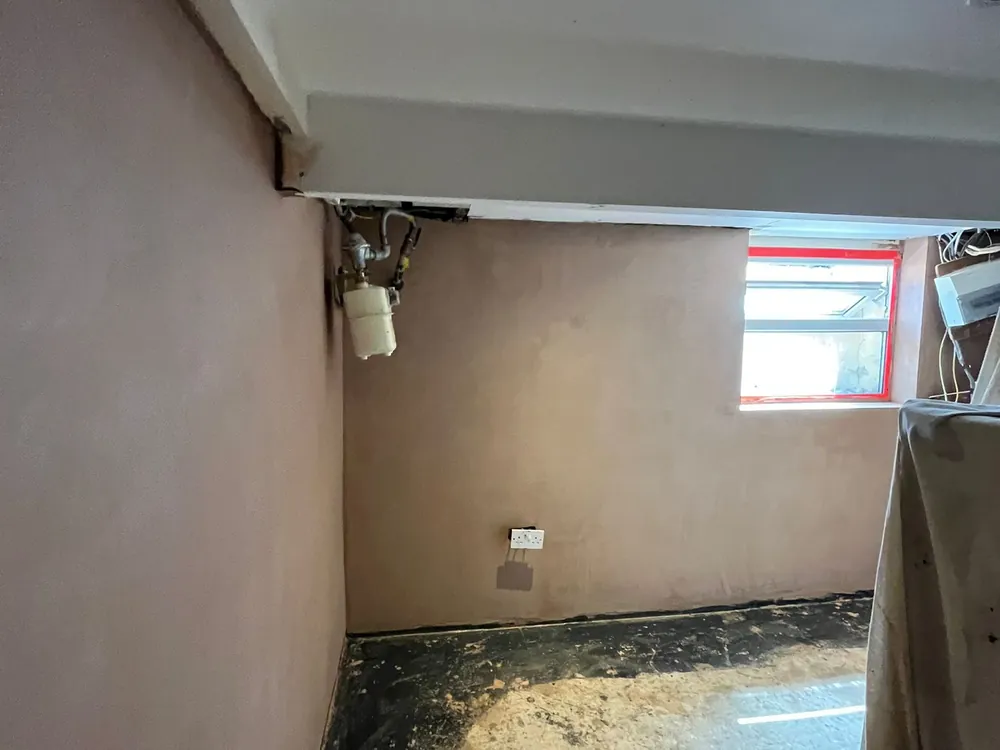
Damp work is mostly hidden once it is finished, so we photograph every stage. This basement was tanked, replastered and handed back dry and ready to use.
View All Damp Proofing Projects


Questions About Rising & Penetrating Damp
If your question isn’t here, call us on 01279 790690 07898 198328 and we’ll talk it through.
Is it rising damp or condensation?
Condensation usually shows as mould in corners, around windows and on cold walls, and gets worse in winter. Rising damp sits low on the wall with tide marks and salts. A survey confirms which it is.
Do I always need a new damp proof course?
No. Often the damp course is fine but has been bridged by high ground, a patio or render. Removing the bridge can be enough. We only recommend a new damp course when it is needed.
Why does the plaster need replacing?
Rising damp carries salts into the plaster. These attract moisture, so the wall can stay damp even after treatment unless the plaster is replaced with a suitable system.
How long does a treated wall take to dry?
Solid walls dry slowly, and thicker walls take longer. We give you advice on heating, ventilation and when it is safe to decorate.

Get In Touch With Our Team
Tell us about your project and we will arrange a visit to talk it through. No pressure, just honest advice and a clear quote.
info@justdomorerenovations.co.uk